Vincent Anthony Leben was born on 13 August 1918, in Lismore, New South Wales, the third child of Mary Baker (1883-1942) and Frederick Ernest Leben (1886-1957).
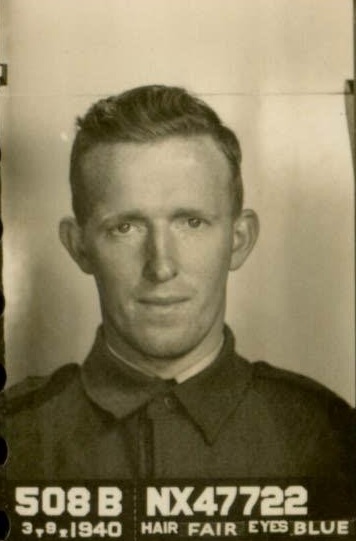
Vincent Anthony Leben on 3 August 1940.
2 July 1940 – Enlisted
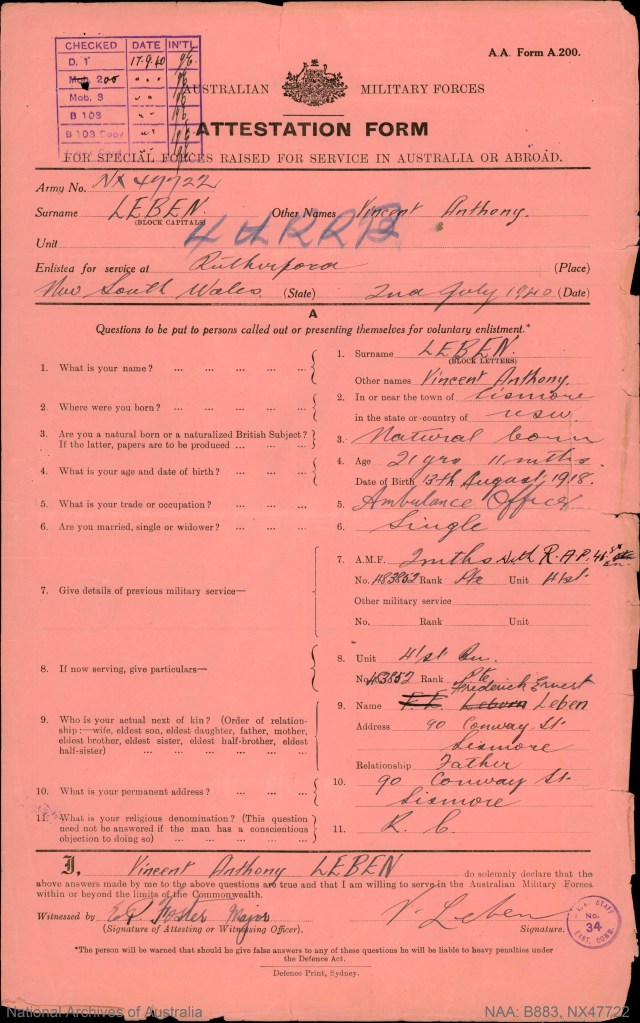
On 2 July 1940, Vincent enlisted in the Australian Military. His attestation form stated:
- Born – Lismore.
- Occupation – Ambulance Officer.
- Married, single or widower – Single.
- Prior Military Service – 2 months with R.A.P. 46 Battallion. No. 483852, at the rank of Private.
- Next of Kin – Father – Frederick Ernest Leben, 90 Conway Street, Lismore, NSW.
- Religious Denomination – Roman Catholic.

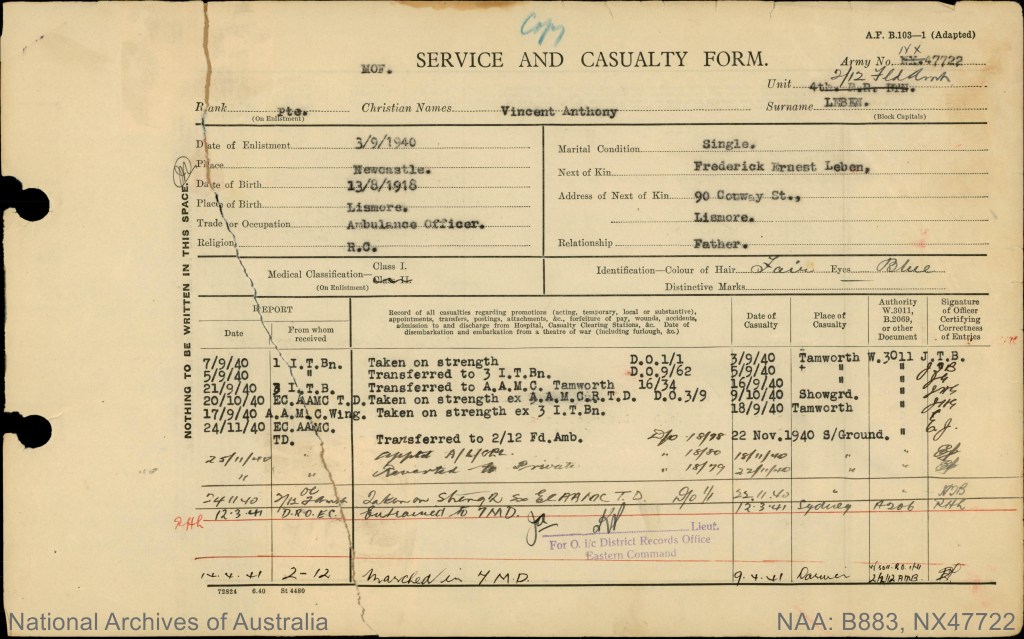
1940 Military Service
On 7 September 1940, Vincent joined a battalion in Tamworth, NSW.
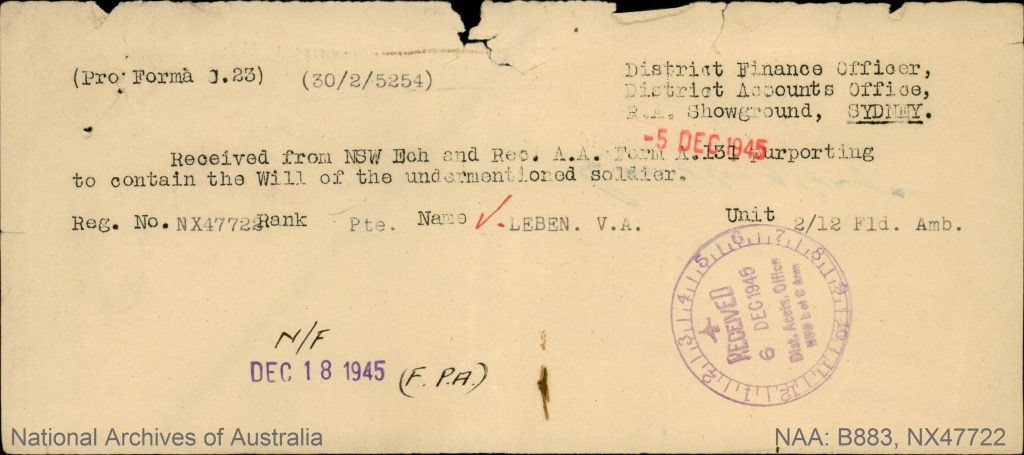
On 24 November 1940, Vincent was transferred to the 2/12 Field Ambulance.
On 12 March 1941, Vincent was transferred to Sydney.
On 14 April 1941, Vincent was transferred to Darwin and also went to Alice Springs.
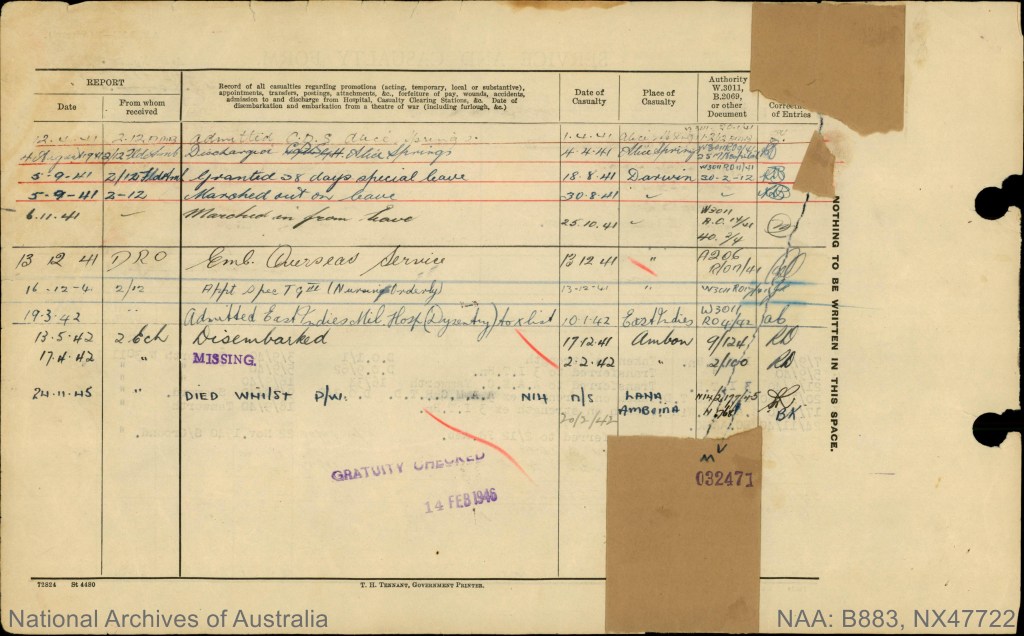
On 13 December 1941, Vincent embarked overseas.

17 December 1941 – Arrival in Ambon
On 17 December 1941, Vincent disembarked in Ambon.
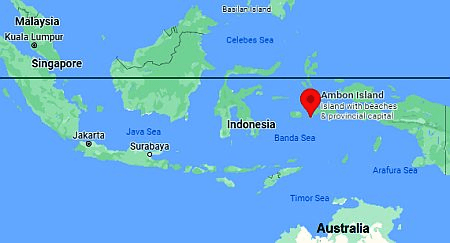
Australian War Memorial: Ambon
“Allies in adversity, Australia and the Dutch in the Pacific War: Massacre at Ambon
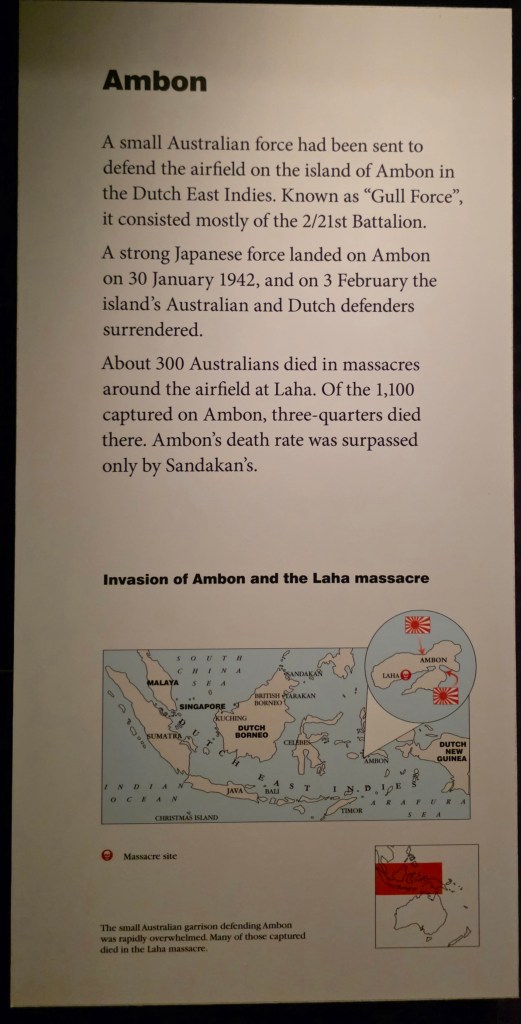
Photograph taken at the Australian War Memorial on 18 November 2025.
Ambon: A small Australian force had been sent to defend the airfield on the island of Ambon in the Dutch East Indies. Known as “Gull Force”, it consisted mostly of the 2/21st Battalion.
A strong Japanese force landed on Ambon on 30 January 1942, and on 3 February the island’s Australian and Dutch defenders surrendered.
About 300 Australians died in massacres around the airfield at Laha. Of the 1,100 captured on Ambon, three-quarters died there. Ambon’s death rate was surpassed only by Sandakan’s.
20 February 1942 – Vincent was Executed whilst a Prisoner of War
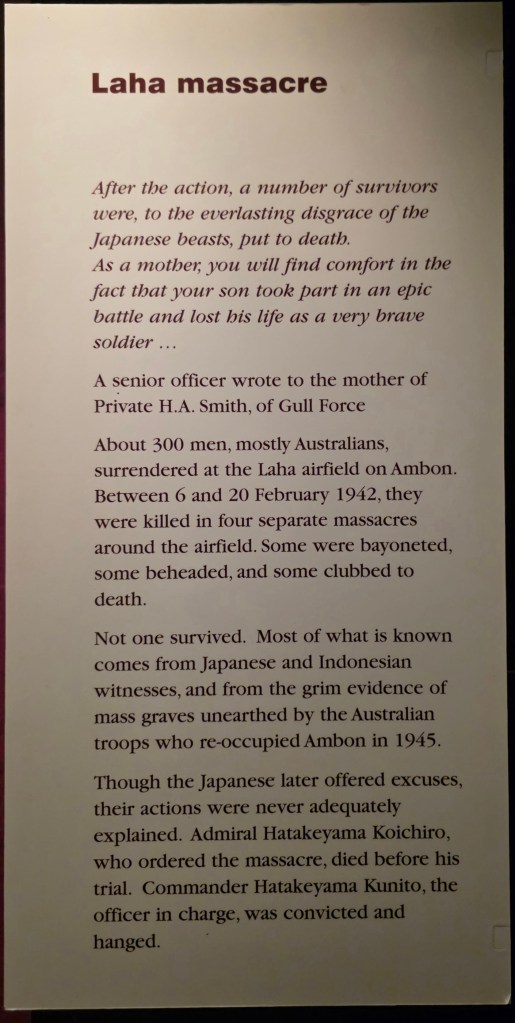
Photograph taken at the Australian War Memorial on 18 November 2025.
“Laha Massacre: After the action, a number of survivors were, to the everlasting disgrace of the Japanese beasts, put to death. As a mother, you will find comfort in the fact that your son took part in an epic battle and lost his life as a very brave soldier…
A senior officer wrote to the mother of Private H.A. Smith, of Gull Force.
About 300 men, mostly Australians, surrendered at the Laha airfield on Ambon. Between 6 and 20 February 1942, they were killed in four separate massacres around the airfield. Some were bayoneted, some beheaded, and some clubbed to death.
Not one survived. Most of what is known comes from Japanese and Indonesian witnesses, and from the grim evidence of mass graves unearthed by the Australian troops who re-occupied Ambon in 1945.
Though the Japanese later offered excuses, their actions were never adequately explained. Admiral Hatakeyama Koichiro, who ordered the massacre, died before his trial. Commander Hatakeyama Kunito, the officer in charge, was convicted and hanged.”
Ambon War Cemetery, Indonesia
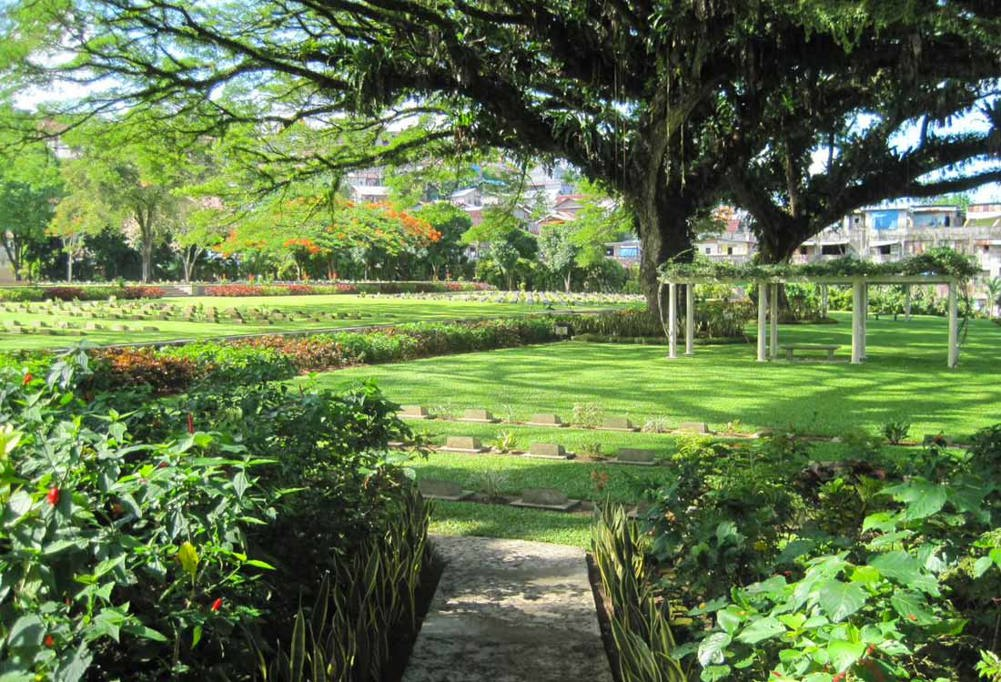
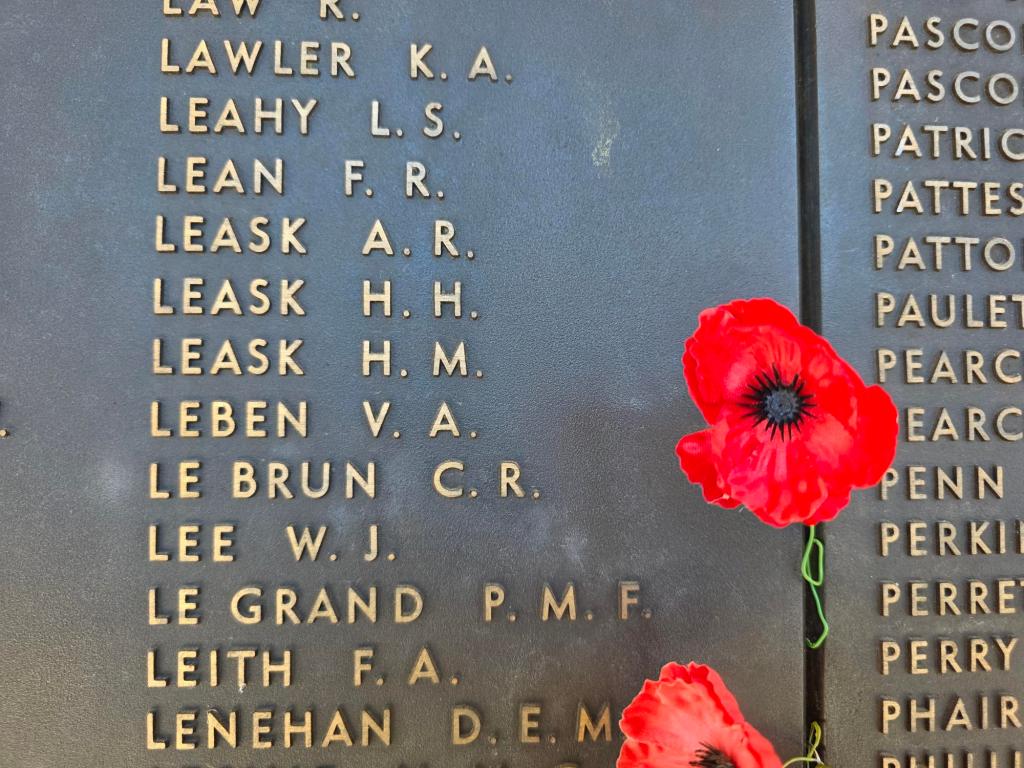
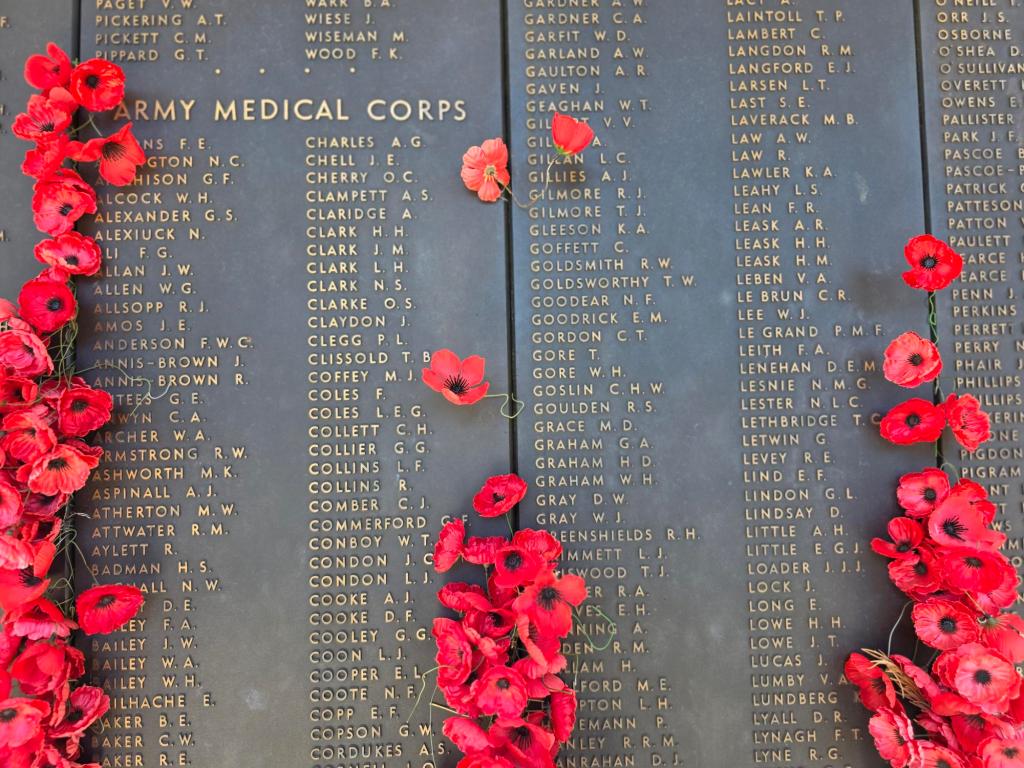
2025 – Australian War Memorial Roll of Honour – Vincent Anthony Leben
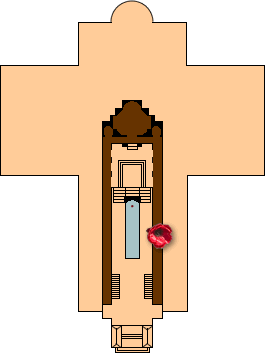
Photographs taken of Vincent Anthony Leben’s name on the Roll of Honour at the Australian War Memorial, Canberra, on 18 November 2025.
Lest We Forget.
 Kitty of the Warmuli Clan of the Dharug people & Joseph Budworth