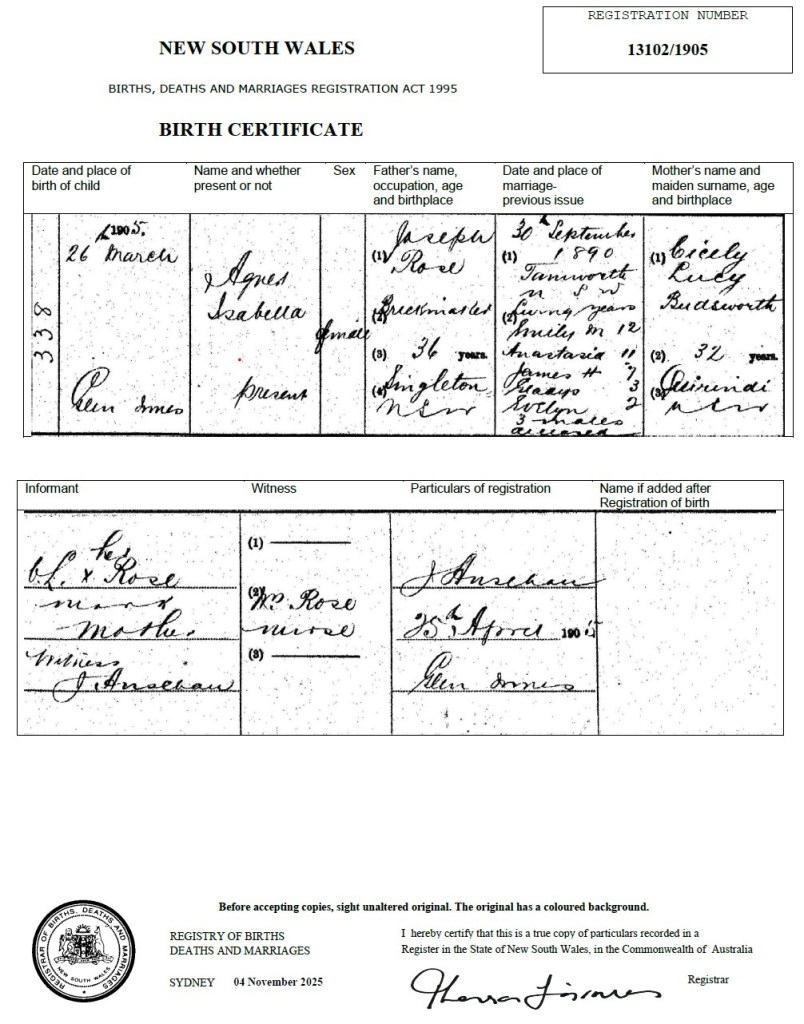
On 29 March 1905, Agnes Isobel Rose was born in Glen Innes, NSW.
Marriage to Hedley Albert Allan Dadd (1902-1965)
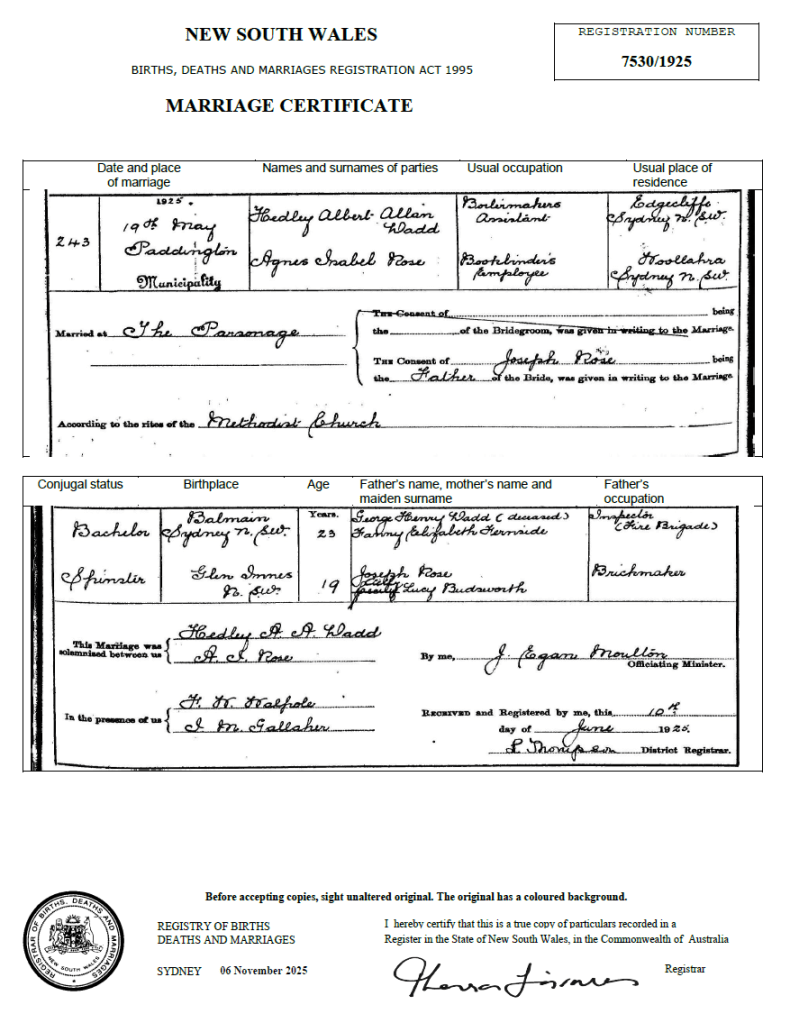
On 19 May 1925, Agnes married Hedley Albert Allan Dadd in Paddington, NSW.
Children
Births of Agnes and Hedley’s 5 Children
| Child No. | First Name(s) | Year | Registration Number | Father’s Stated Given Name(s) | Mother’s Stated Given Name(s) | District |
| 1 | Ronald Eric James Dadd | 1925 | ||||
| 2 | Joyce Alwyn Dadd | 1928 | ||||
| 3 | Gloria Elizabeth Majorie Dadd | 1932 | ||||
| 4 | Allan George Dadd | 1934 | ||||
| 5 | Cheryl Dadd | 1946 |
Marriages of Agnes and Hedley’s 5 Children
| Child No. | First Name(s) | Year | Registration Number | Father’s Stated Given Name(s) | Mother’s Stated Given Name(s) | District | Spouse’s Name |
| 1 | Ronald Eric James | 1953 | 8122/1953 | Burwood, NSW | Carmel Anne Cole | ||
| 2 | Joyce Alwyn | 1954 | 8937/1954 | Campsie, NSW | John Brien Baker | ||
| 3 | Gloria Elizabeth Majorie Dadd | Max Schnebli | |||||
| 3 | Gloria Elizabeth Majorie Dadd | Hampson | |||||
| 4 | Allan George Joseph Dadd | 1957 | 17079/1957 | Burwood, NSW | Valerie Grace Giles | ||
| 5 | Cheryl Rose Anne Dadd | 1967 | 8575/1967 | Sydney, NSW | Richard Martin Roskam |
Deaths of Agnes and Hedley’s 5 Children
| Child No. | First Name(s) | Year | Reg. Number | Father’s Stated Given Name(s) | Mother’s Stated Given Name(s) | District |
| 1 | Ronald Eric James Dadd | 1953 (aged 28, died on his honeymoon) | 23886/1953 | Hedley Albert Allan | Agnes Isabel | Inverell, NSW |
| 2 | Joyce Alwyn Baker | |||||
| 3 | Gloria Hampson | |||||
| 4 | Allan George Dadd | |||||
| 5 | Cheryl Roskam |
Hedley Albert Allan Dadd (1902-1965)
On 22 January 1902, Hedley was born in Balmain South.
-Hedley was the son of George Henry Dadd (1860-1921) and Elizabeth Fanny Fearnside (1859-1925). George was born in Portsmouth, Hampshire England and served in the Royal Navy. He came to Australia and served in the NSW Fire Brigade for over 30 years. He became inspector of country fire brigades. Elizabeth was born in Parramatta, NSW.
Youth
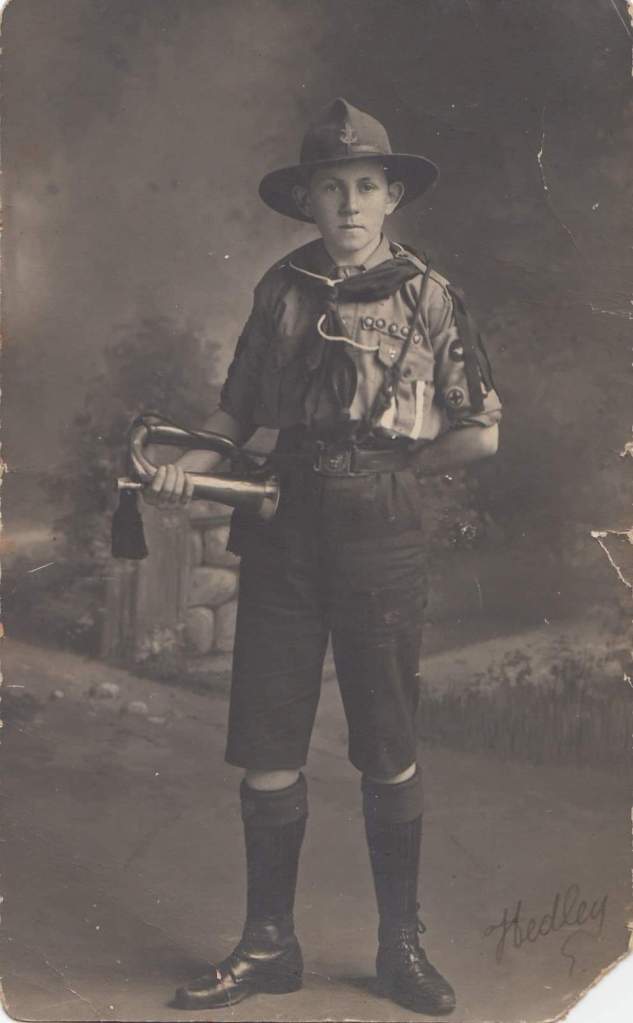
Hedley was a bugler and boy scout.
Adulthood
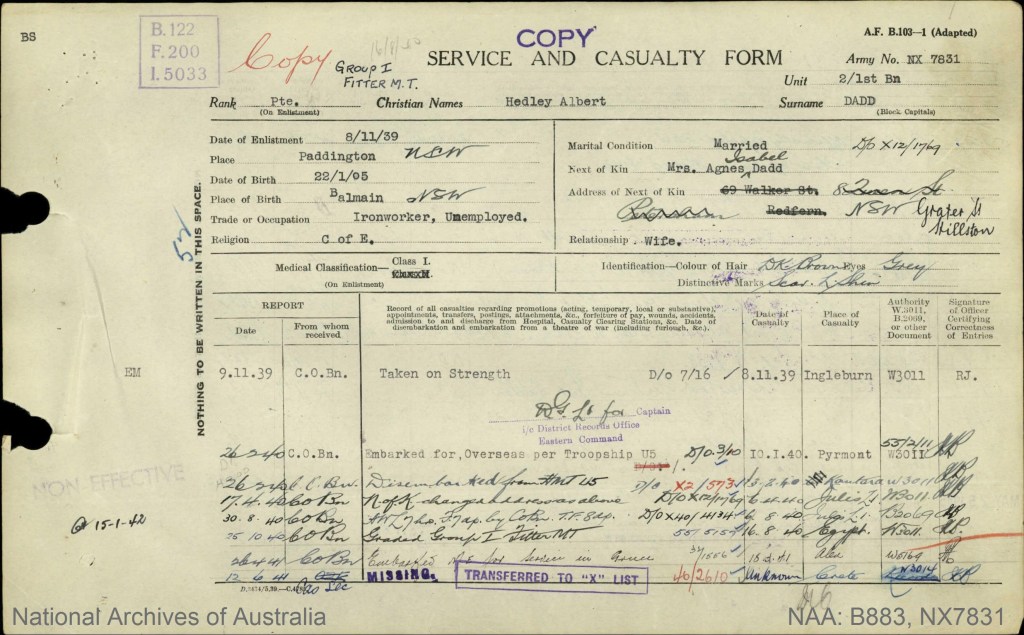
Hedley worked as an iron worker, but at the time World War 2 commenced, he was unemployed.

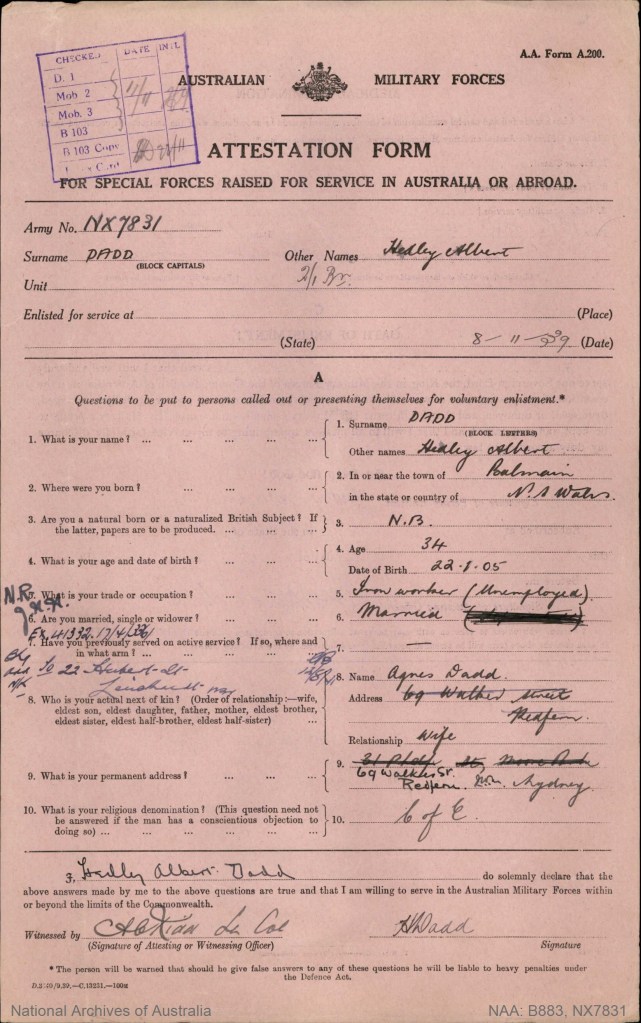
1939 – Enlistment in the Australian Military 2/1st Australian Infantry Battalion
On 8 November 1939, Hedley enlisted in the Australian Military. Hedley was assigned to the 2/1st Australian Infantry Battalion.

1940 – Australian Military War Service
On 26 February 1940, Hedley embarked for overseas at Pyrmont onboard Troopship U5.
On 26 May 1940, Hedley disembarked in Kantara, Palestine.
In 25 October 1940, Hedley was stationed in Egypt.


Postcards Hedley sent to the family from Egypt in December 1940.
1941 – The 2/1st Battalion – January 1941
In May 1941, Hedley was involved in the battles for the island of Crete.
The Australian War Memorial describes these battles in more detail as follows:
On 30 May 1941, the Australian 2/1st Infantry Battalion surrendered and Hedley and the remaining troops were captured by the Germans.
From 1 June to July 1941, Hedley was interned on Crete.
On 12 June 1941, Hedley was listed as Missing In Action on Crete.
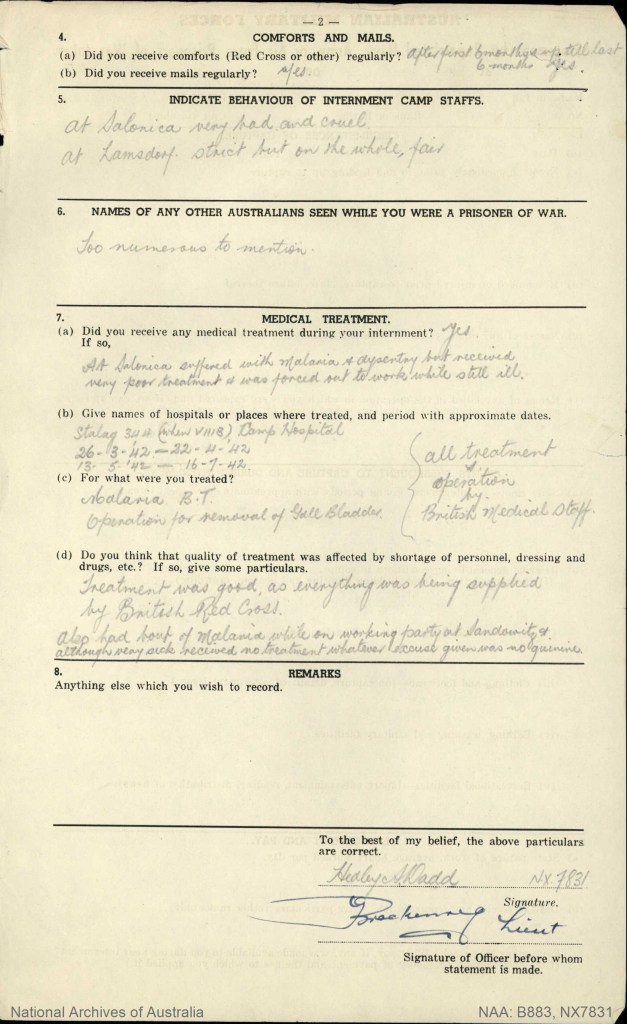
From July to 1 October 1941, Hedley was interned in Salonica, Greece. Hedley wrote “Salonica everything bad. No bedding, lighting or heating.” Behaviour of internment camp staff “At Salonica very bad and cruel”. “At Salonica suffered with malaria & dysentery but received very poor treatment & was forced out to work while still ill.”
On 1 October 1941, Hedley was transported to Germany.
On 9 October 1941, Hedley arrived in Stalag VIII-B (later renamed Stalag-344).

On 5 January 1942, Hedley was official reported as a Prisoner Of War.
Stalag VIII-B (Stalag-344)
Hedley wrote “Stalag 344, bedding poor, lighting poor. Heating bad & in cases overcrowded. Rations quantity fair, quality very poor. No clothing issued outside British Red Cross supplies. Only wooden clogs. Bath 1 per week, 1 small cake of soap issued once per month. Water for washing very scarce. All recreational facilities only what were made by British Red Cross & YMCA.” Employment “For 3.5 years at sugar factory 12 hours per day. Sundays during off season free.” Renumeration “Offseason 10 pfennings per day, in season 1 mk 20 phennings”. Behaviour of internment camp staff “At Lamsdorf strict but on the whole, fair”.
Hedley wrote about requiring medical treatment: “Camp Hospital 26.3.42-22.4.42, 13.5.42-16.7.42.” Treated for “Malaria B.T. & Operational for removal of gall bladder. All treatment & operation by British medical staff”. “Treatment was good, as everything was being supplied by British Red Cross. Also had bout of malaria while on working party at Sandurvitz & although very sick received no treatment whatever excuse given was no quinine.”
Prisoner of War Documentation

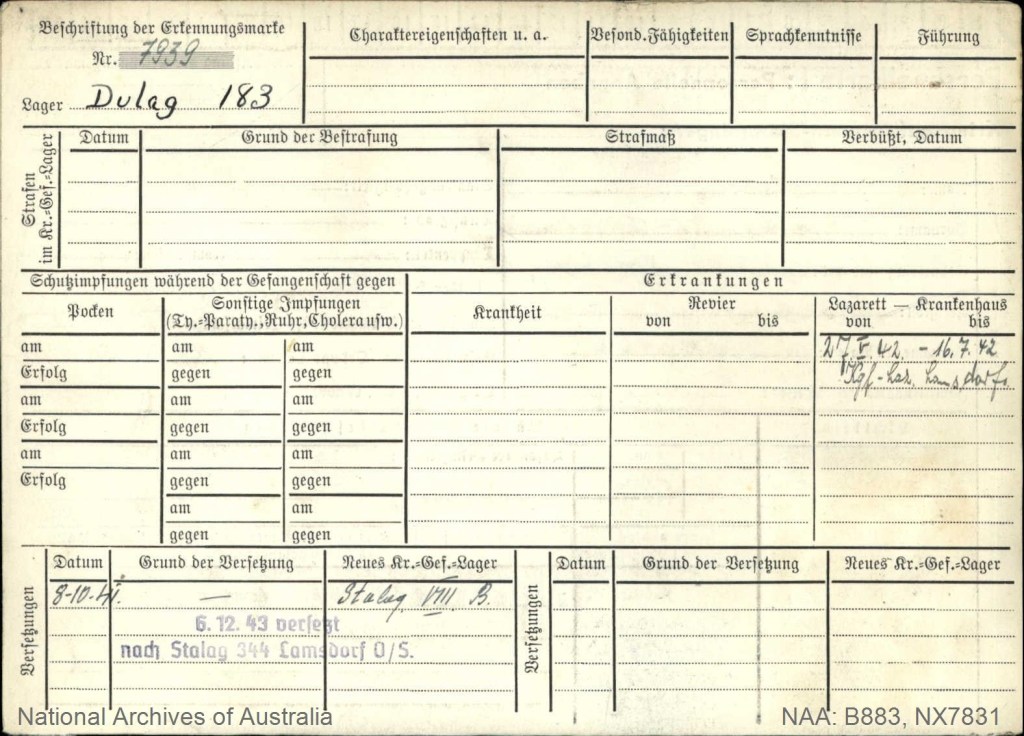

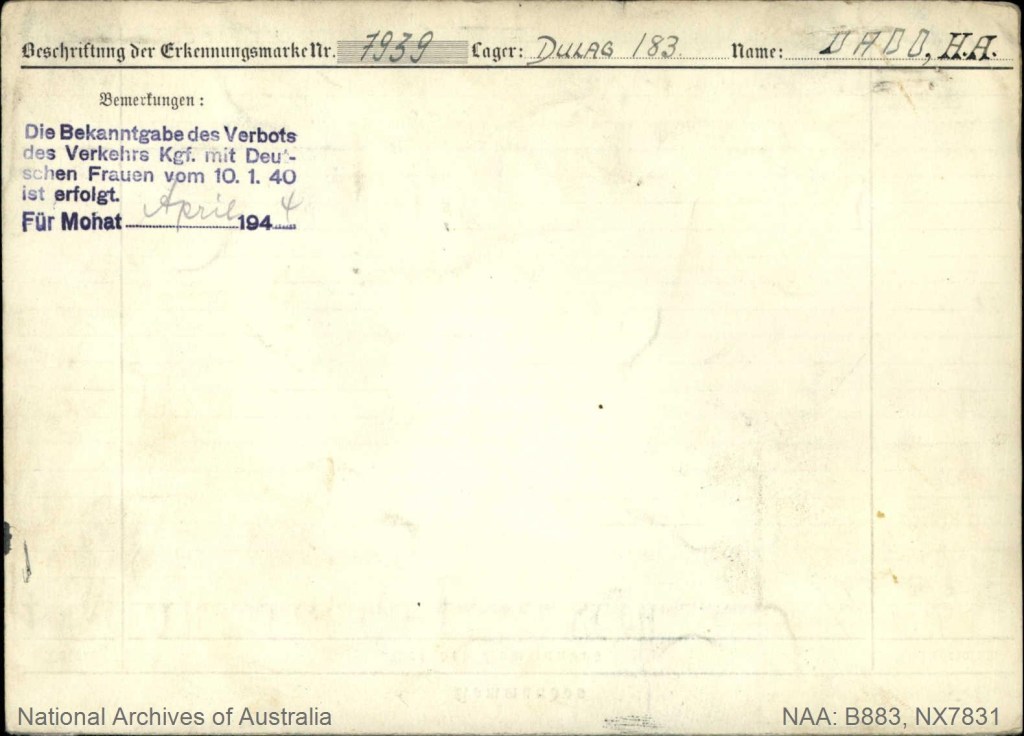
1945 – Hedley Survives WW2
On 25 May 1945, London reported that Hedley had been recovered as a Prisoner Of War.
On 4 July 1945, Hedley departed London.
On 8 August 1945, Hedley arrived in Sydney.
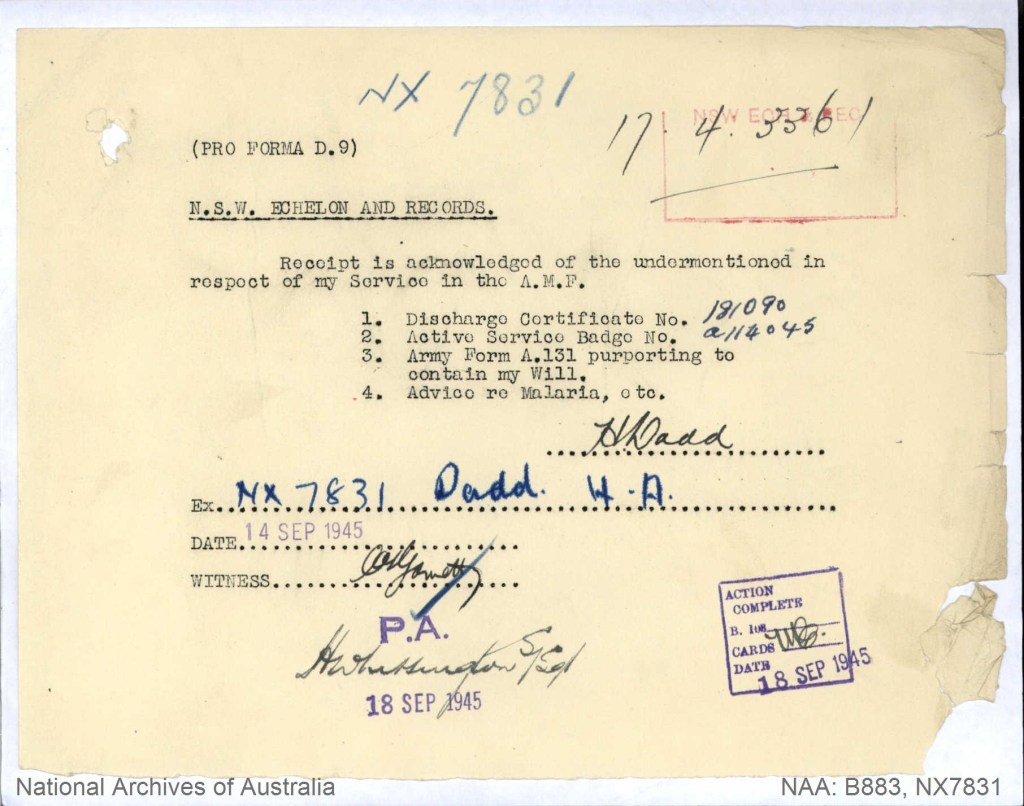
On 13 September 1945, Hedley was discharged from the military at his own request on compassionate grounds.

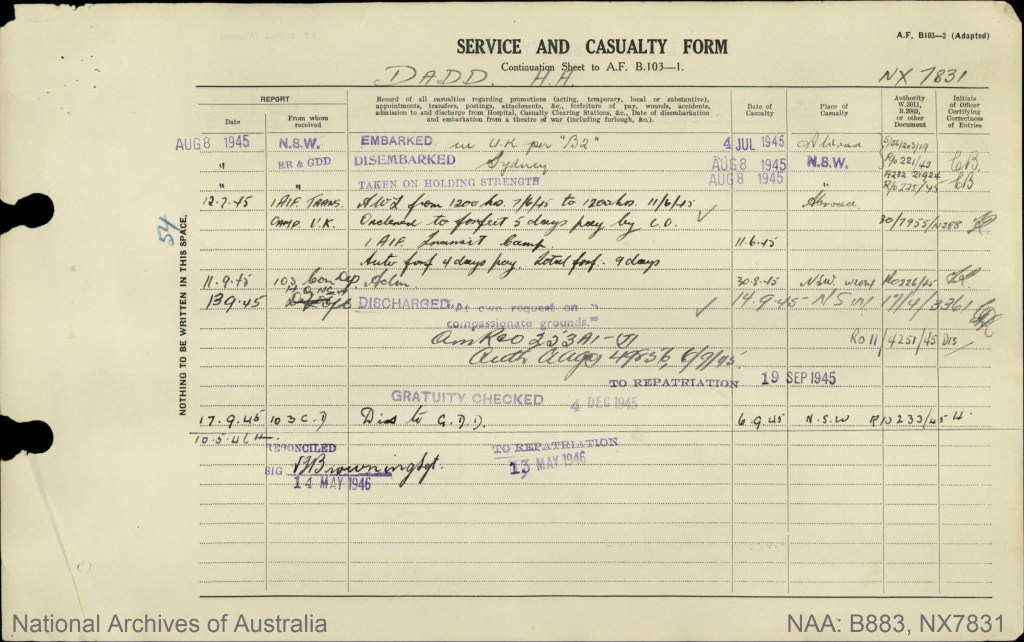
1945 – Australian Military Forces – Statement by Repatriated Prisoner of War

1945 – Discharge Paperwork

The Australian War Memorial Records


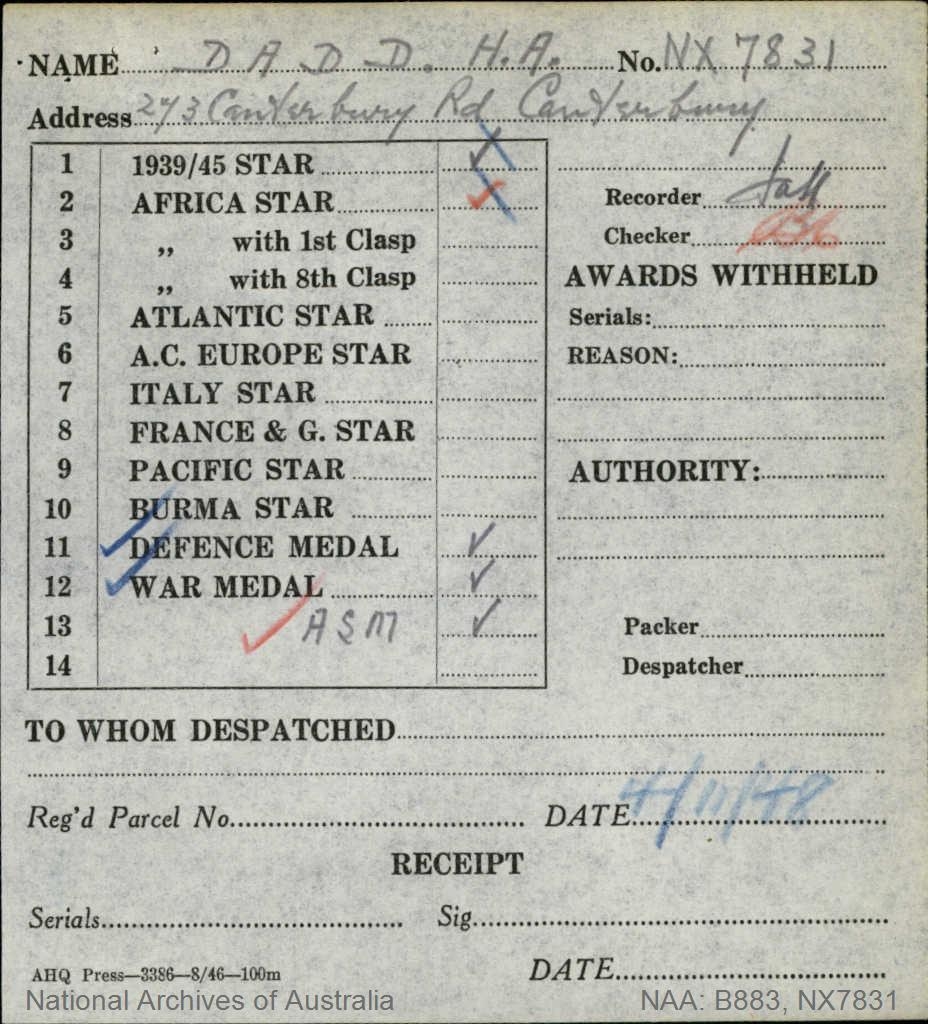
1948 – Military Awards
On 4 November 1948, Hedley was awarded the 1939/45 Star, the Africa Star, the Defence Medal, War Medal, and the Australian Service Medal.
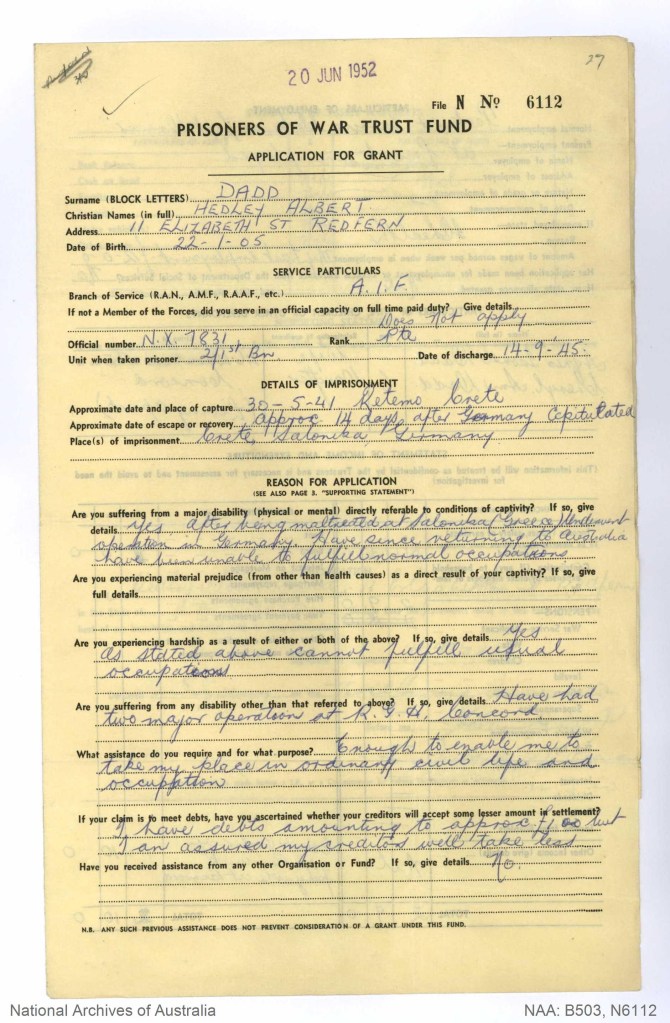
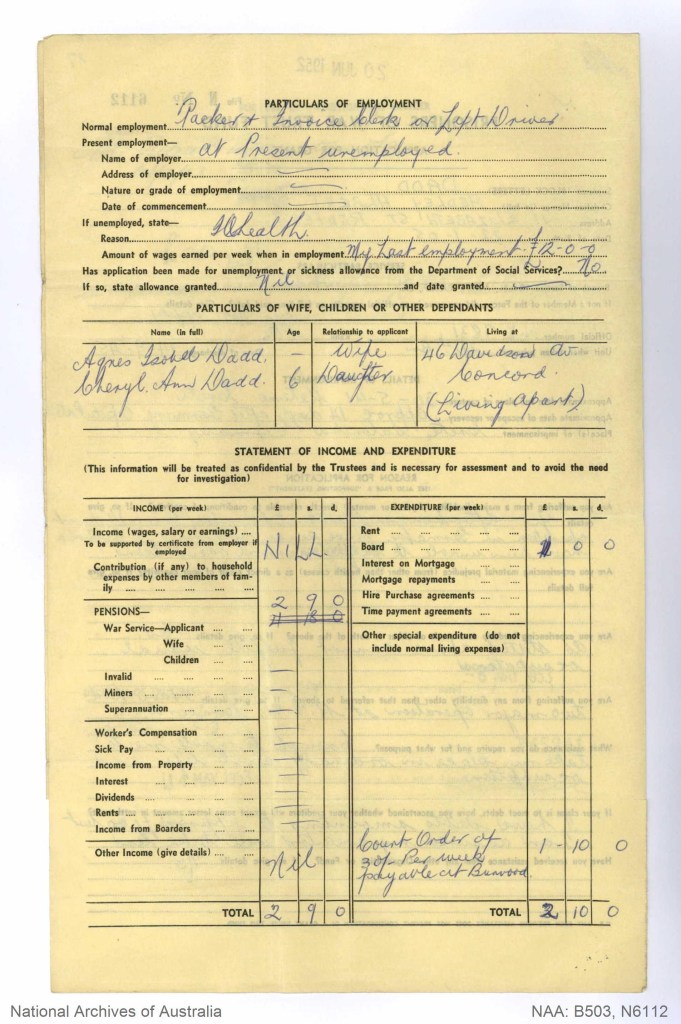
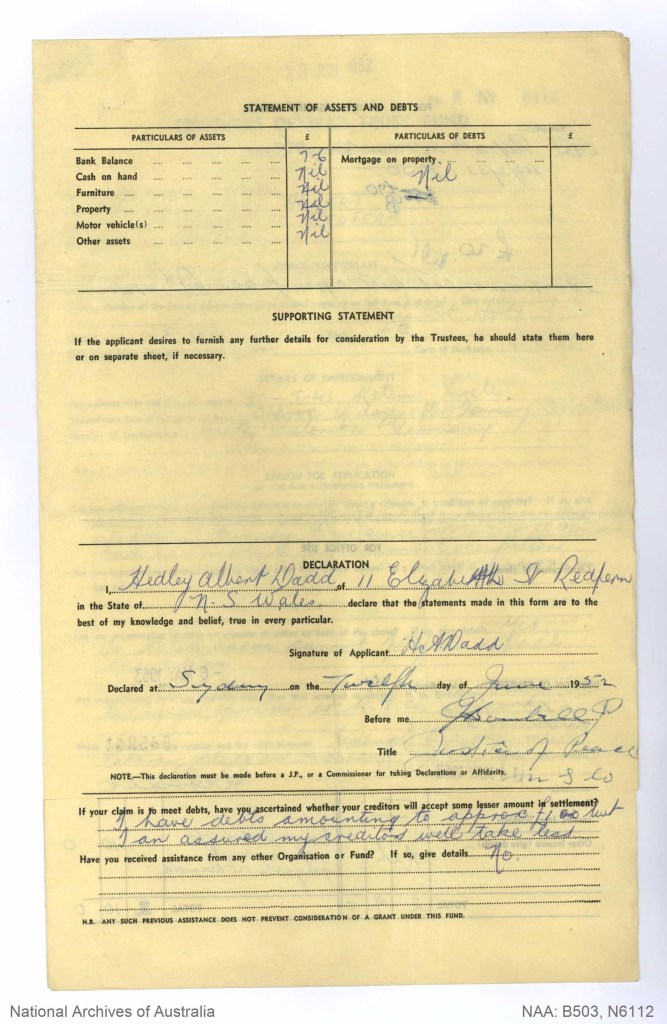
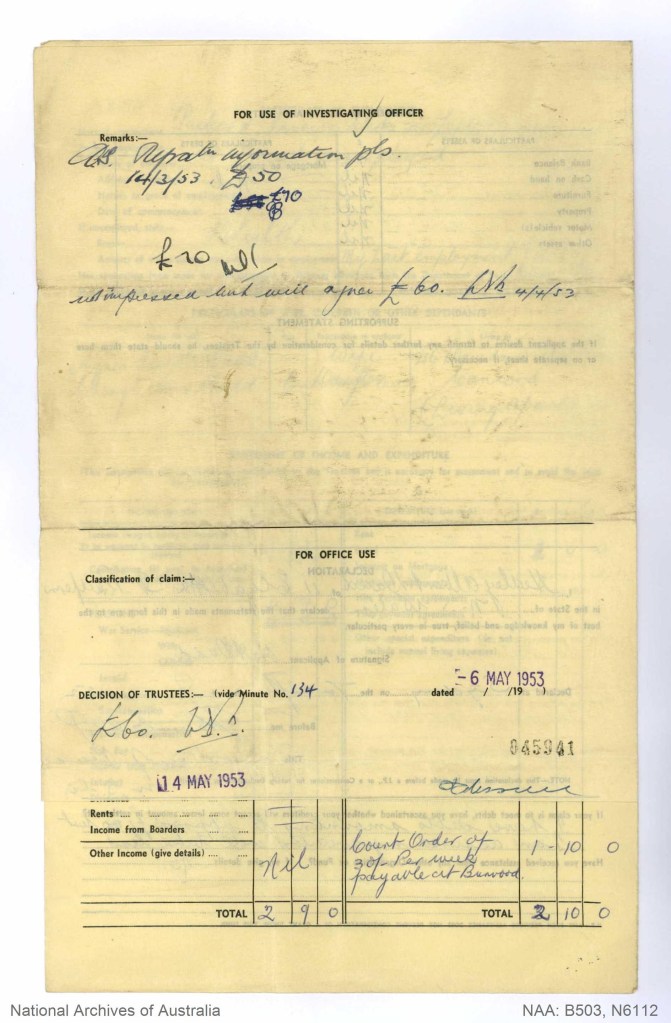
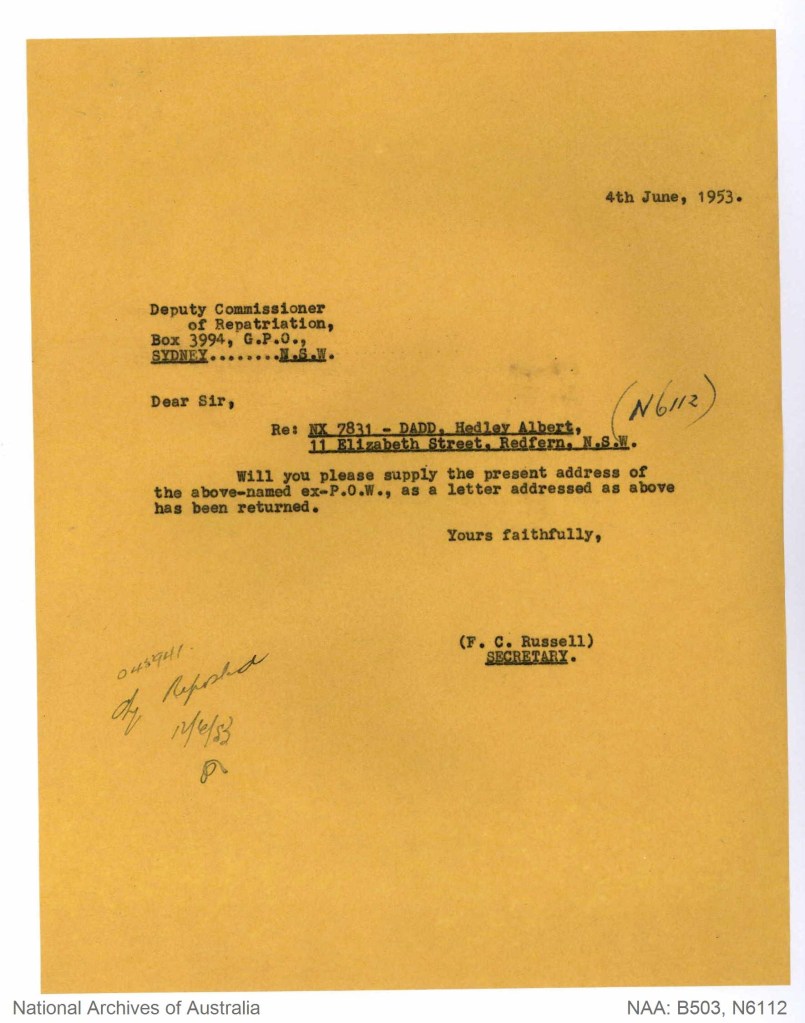
1952 Prisoners of War Trust Fund Application
In 1952, Hedley submitted a Prisoners of War Trust Fund Application.

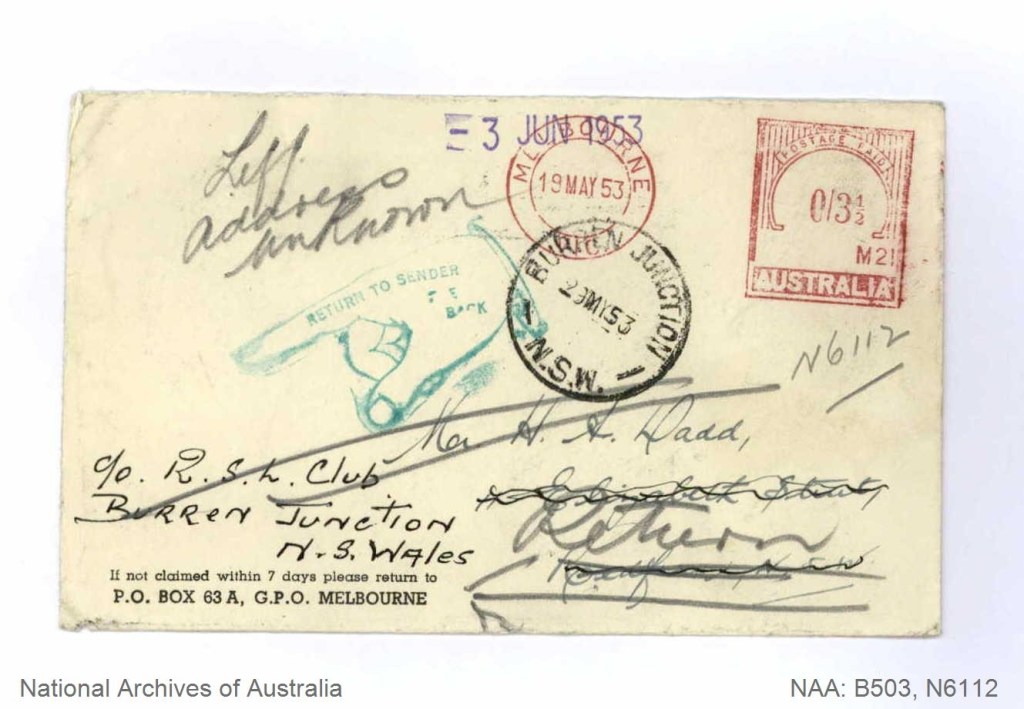


1965 – Death of Hedley Albert Dadd
On 16 February 1965, Hedley Albert Dadd died at Concord Repatriation General Hospital.
On 18 February 1965, Hedley was buried at the Methodist Cemetery, Rookwood, NSW.
Registration Number: 830/1965
Surname: Dadd
Christan name: Hedley Albert
Usual residence: 114 Glenmore Road, Paddington
Place of birth: Balmain, NSW
Father: George Albert Dadd, Fire Inspector
Mother: Elizabeth Furnside
Place of Marriage: Paddington, NSW
At what age: 23 years
To whom: Agnes Rose.
Conjugal status of deceased: Married
Issue in order of birth: Ronald deceased, Joyce 37 years, Gloria E 34, Alan G 29, Cheryl R 18.
Cause of death and duration of last illness: Pulmonary embolus minutes, Deep vein thrombosis approximately 6 months.

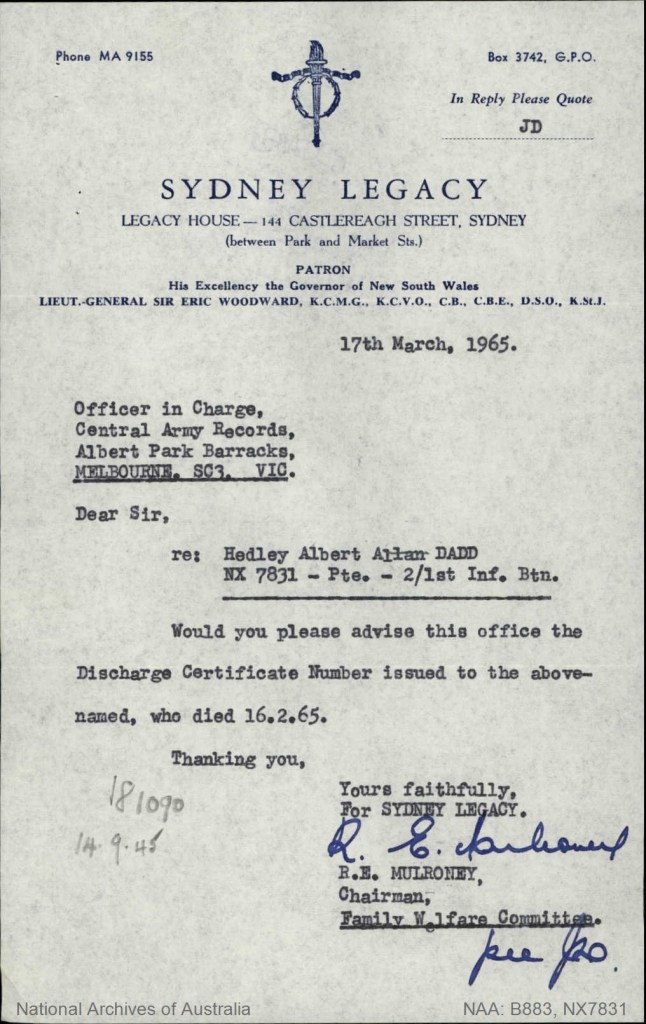
In March 1965, Sydney Legacy wrote the following letters.


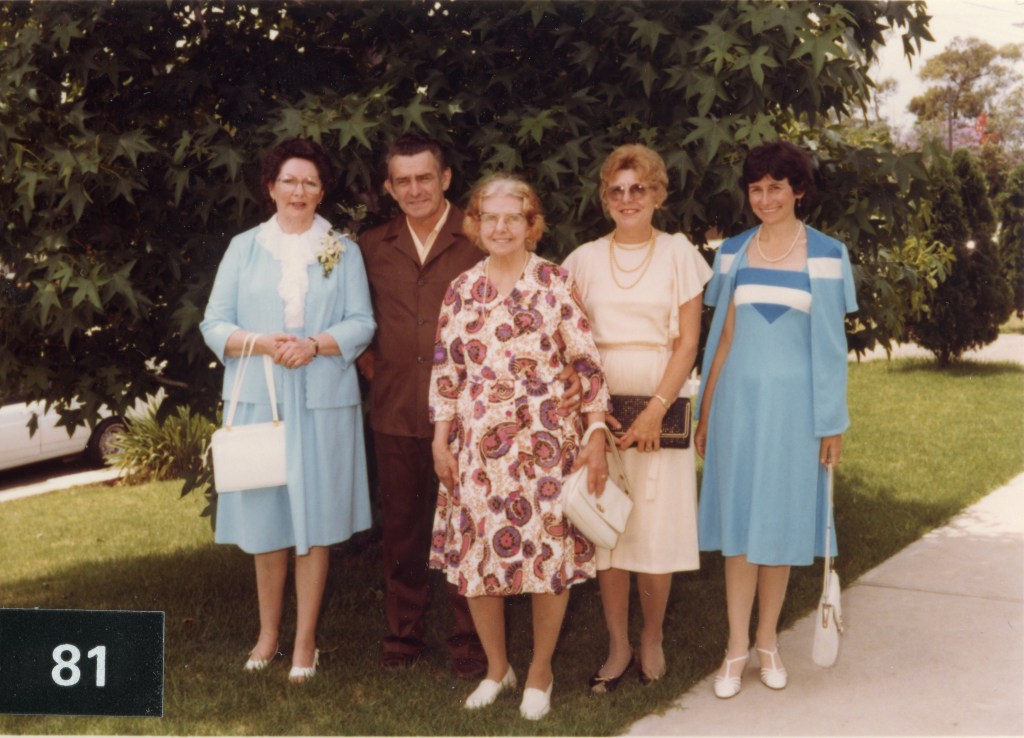
1982 – Family Photographs

1995 – Death of Agnes
On 22 May 1995, Agnes died at the age of 90 at Frank Whiddon Nursing Home, Glenfield, NSW.

 Kitty of the Warmuli Clan of the Dharug people & Joseph Budworth